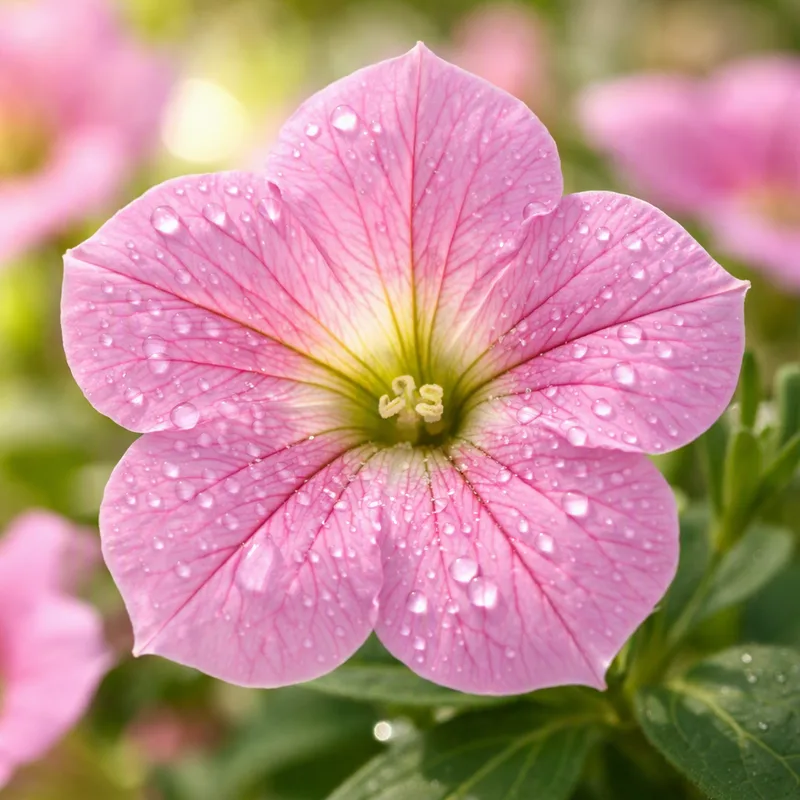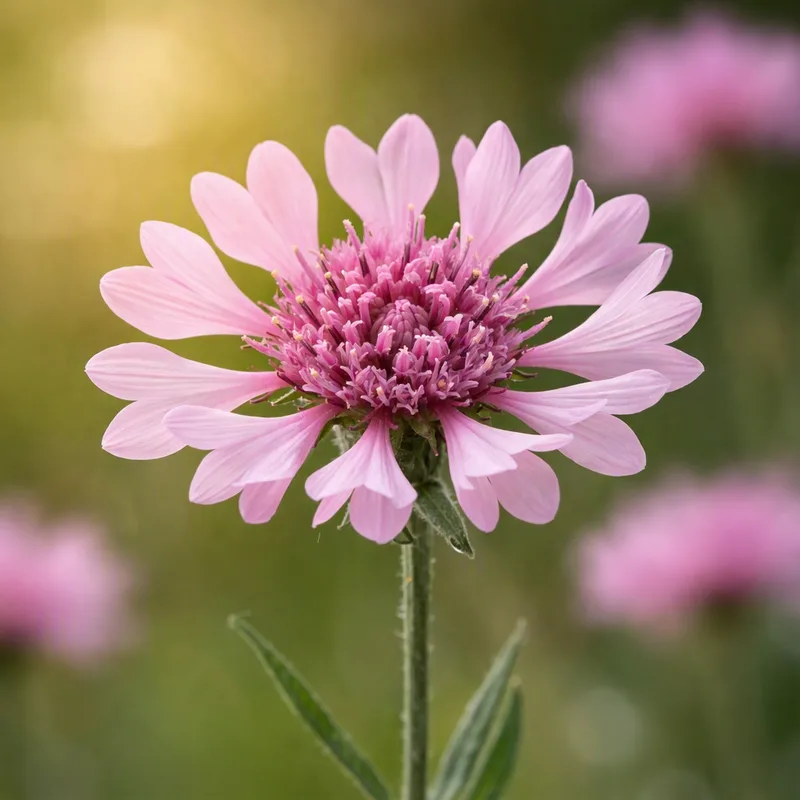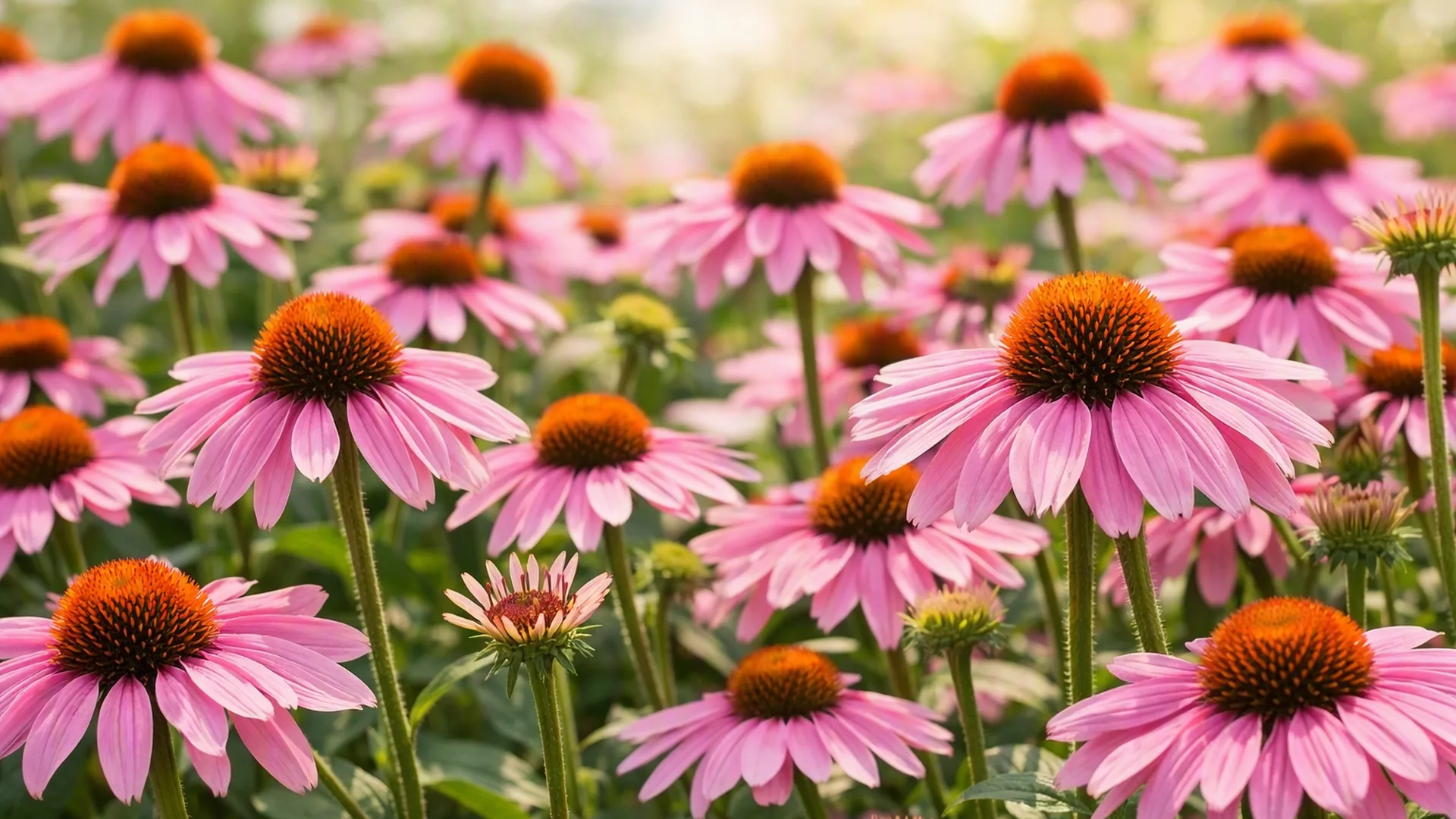
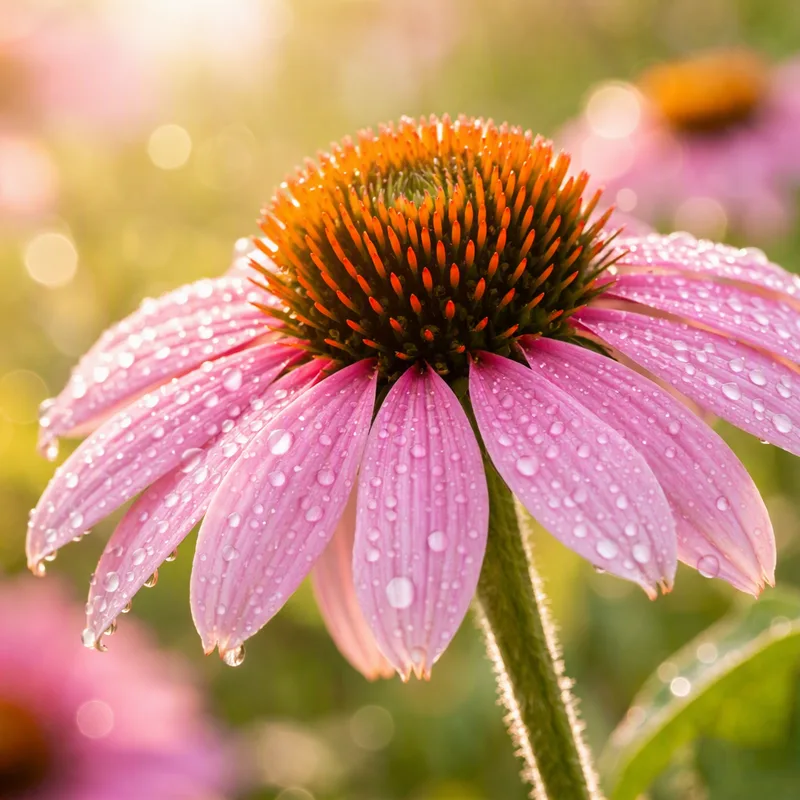
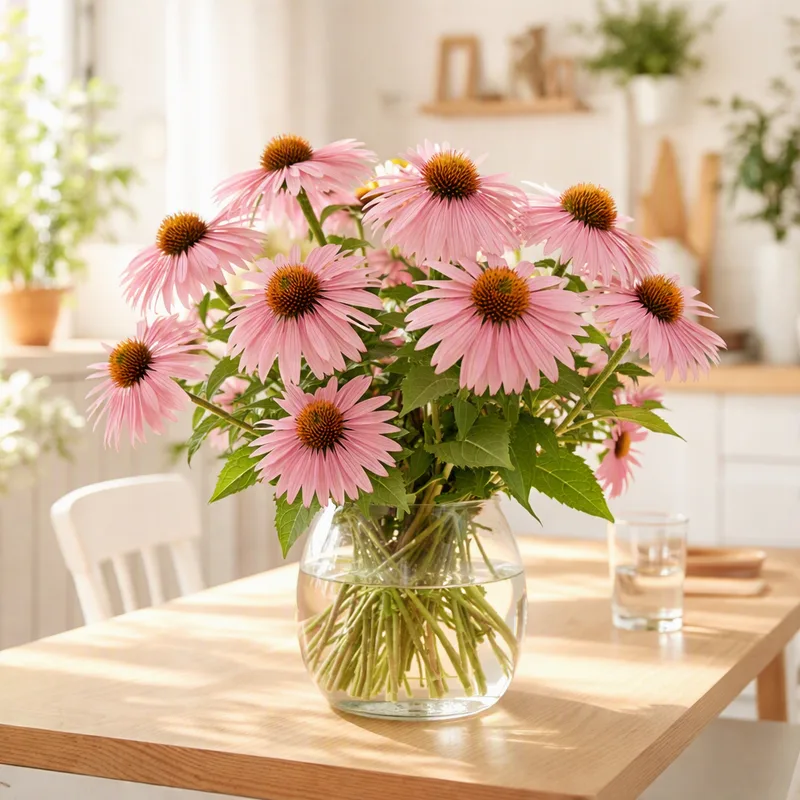
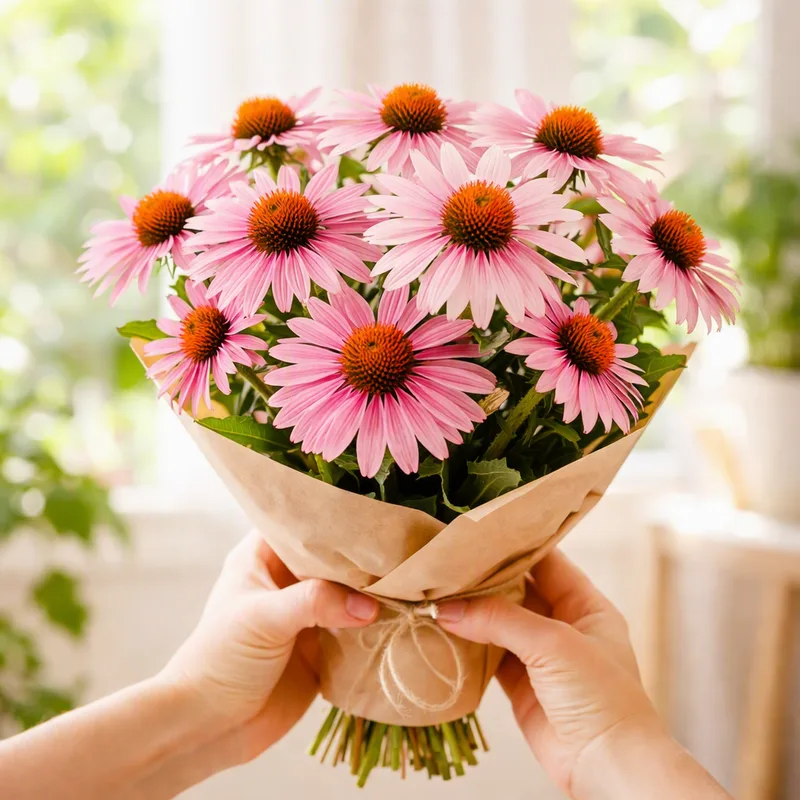
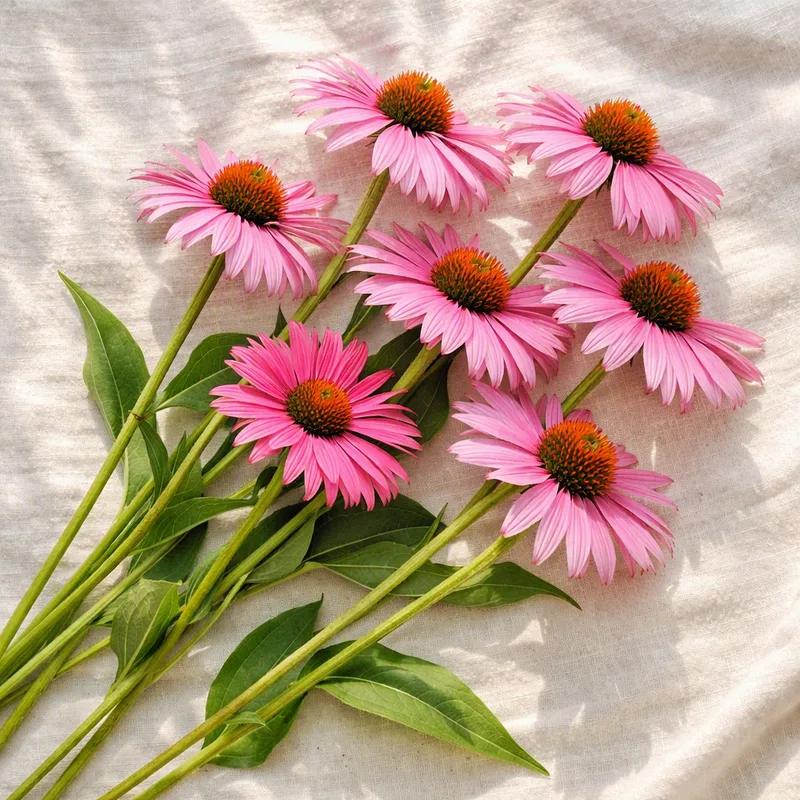
Pink coneflowers are the closest to the wild Echinacea purpurea. The ray florets droop around a domed orange-brown cone, and the colour sits between pink and purple. Wikipedia describes the ring as pink or purple.
Wild-type and bred pinks
- Wild-type plants: loose rose-purple petals, tall and airy.
- 'Magnus': a well-known selection with broad, flat petals.
- Double pinks, with a pompom of petals in place of the cone, look striking but offer less to bees.
- Compact types around half a metre high suit pots and small gardens.
Colours range from blush to bright magenta depending on the cultivar.
Using pink coneflowers
Pink goes naturally with ornamental grasses, silver foliage and purple salvias. Plant in drifts of three to five for impact. Because the cones persist, the plant stays interesting after the petals fall.
Seasonal calendar for the Southern Hemisphere
- Spring (September to November): plant or divide.
- Summer (December to February): main flowering. Water in heatwaves.
- Autumn (March to May): leave seed heads for birds.
- Winter (June to August): cut dead stems to the ground in cold areas.
Where they perform
Cooler southern regions and the highlands are ideal. In humid Brisbane they flower well if drainage is sharp. Tropical gardens are not a good match.
Cut stems, pets and supplements
A cut pink coneflower lasts about seven to ten days. The ASPCA lists the plant as non-toxic to dogs and cats. Herbal supplements made from echinacea are another matter, and a pharmacist can advise.