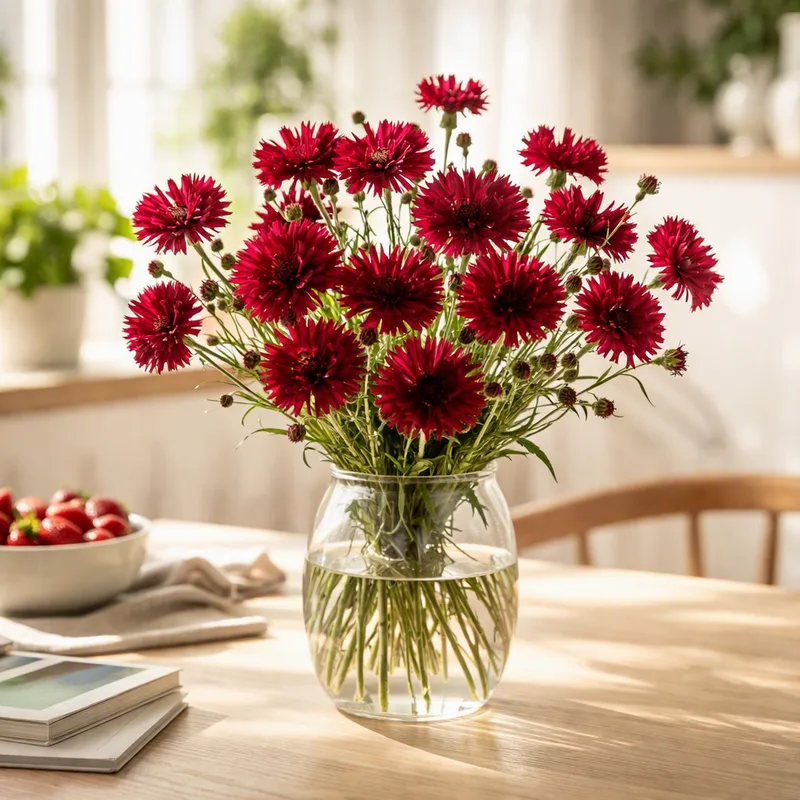

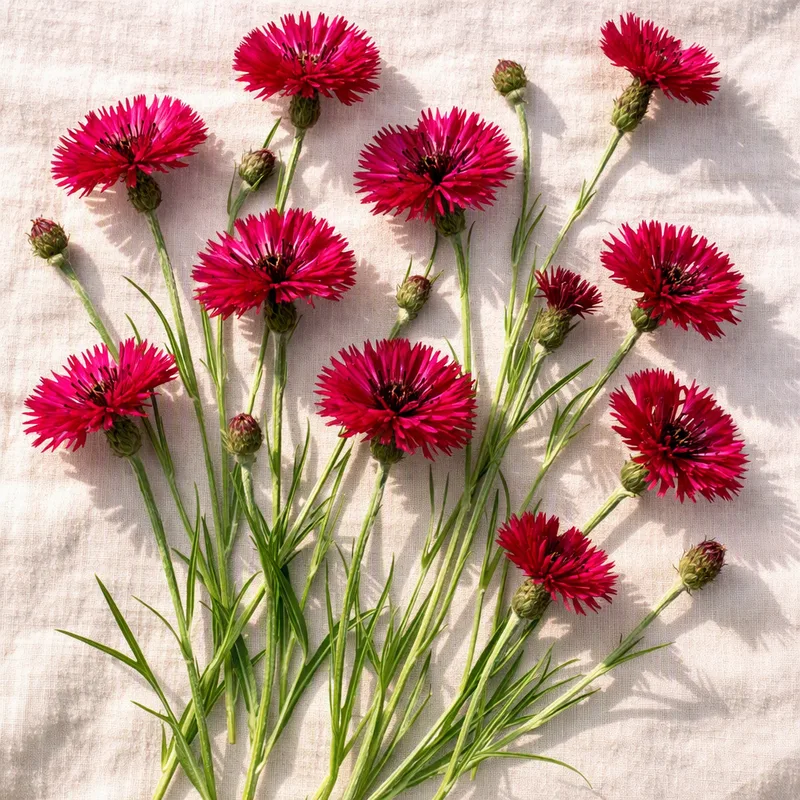
Is there a red cornflower?
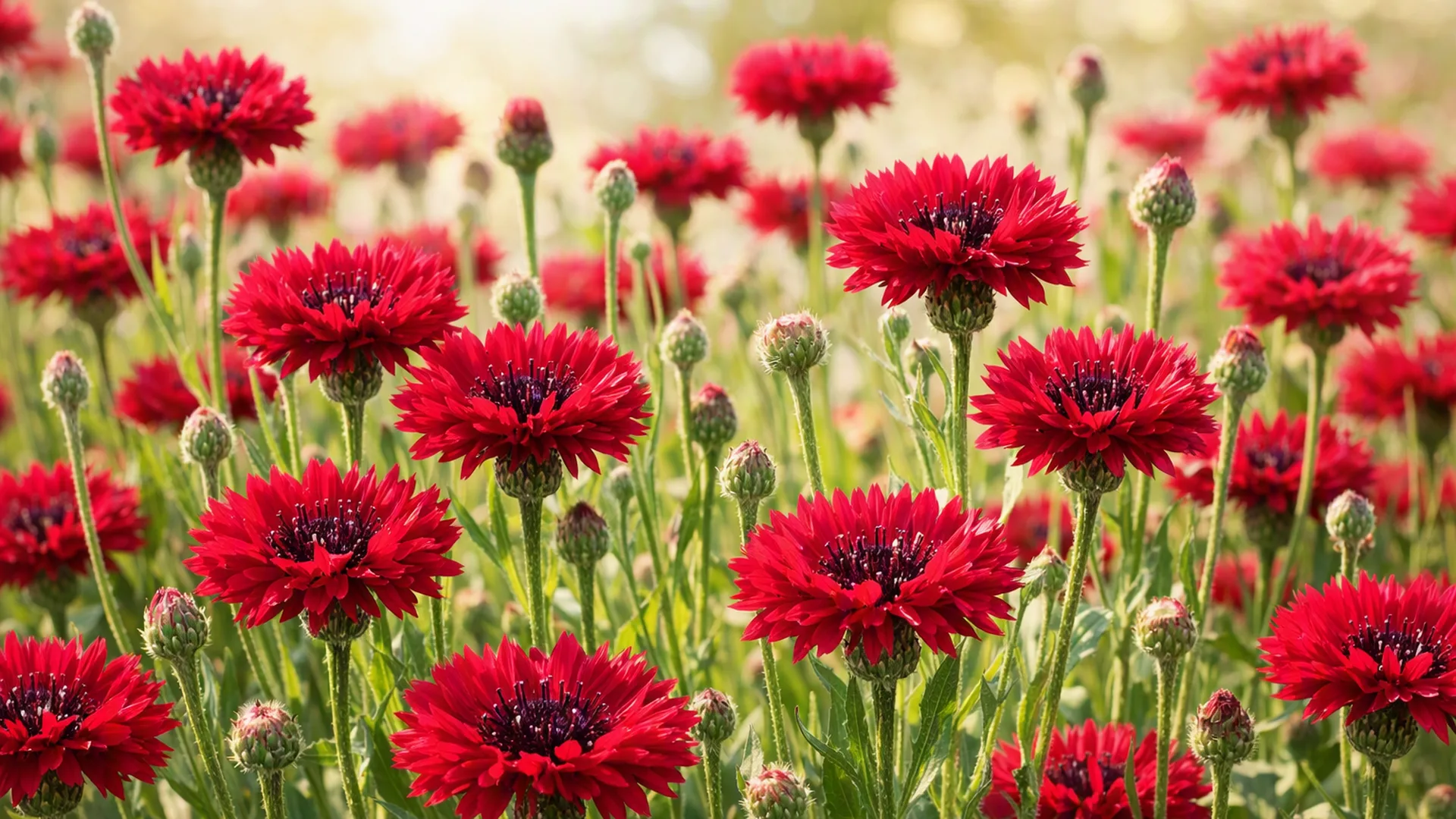
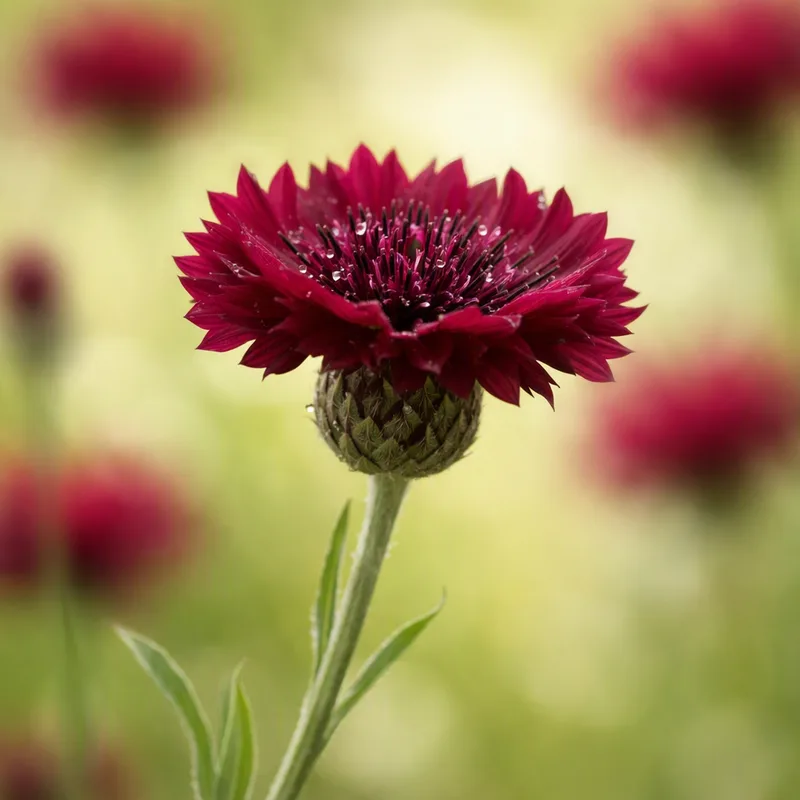
Not really. Centaurea cyanus is blue in the wild, and its cultivated colours are mainly white, pink, lavender and a very dark maroon that nurseries label as black. So a red cornflower is best read as a deep maroon or wine-red selection. Often the flower looks nearly black at a distance and shows red tones only in strong light.
Using the dark shades
Dark cornflowers are striking in a mixed bunch because the colour is rare in cut flowers, and the maroon is cooler and bluer than a true red. Try one or two stems among white cornflowers, pale pink roses or silvery foliage. In the garden, a patch of maroon in front of blue lupins or delphiniums gives a rich, moody effect.
Sowing the maroon forms
- Sow outdoors in autumn in temperate areas and flowers appear in spring.
- Early spring sowing gives summer flowers in cool districts.
- Plants grow up to about a metre tall, so give them some space or light support.
- Full sun, and no extra fertiliser.
Vase life, poppies and pets
Cornflowers keep their shape in a vase for roughly five to seven days, and the buds go on opening. Cut stems in the morning and change the water often.
On Remembrance Day, 11 November, Australians wear red poppies. France has its own counterpart in the cornflower, and the ASPCA records no toxicity from it for dogs or cats. Cornflower petals can also be dried for tea blends.