
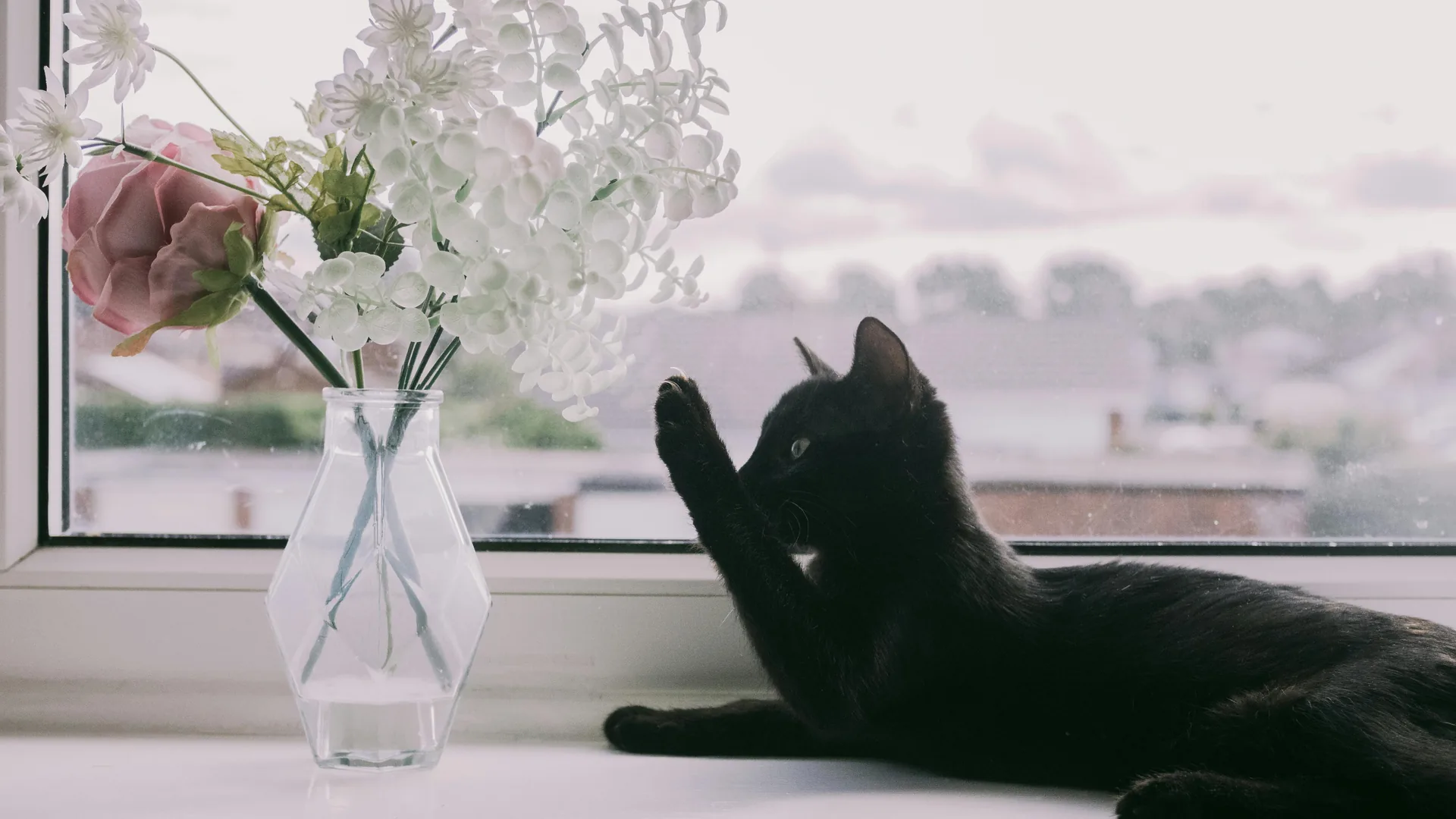
Cut flowers that can harm dogs and cats
A pretty bunch on the coffee table can be a hazard when a curious cat or puppy lives there. This guide shows which popular flowers to steer clear of, which ones are kinder choices and how to react if a pet chews a stem.
Plenty of ready-made and mixed bunches hold at least one flower that is a poor match for a home with a dog or cat. Knowing the troublemakers helps you pick the right bunch, put it somewhere safe or ask for particular flowers to be left out when you order.
Summary
- LiliesThe biggest danger to cats, with a risk of kidney failure.
- TulipsDrooling and stomach upset, with the bulb the worst part.
- DaffodilsHarmful to dogs and cats, particularly the bulb.
- HyacinthIrritates the mouth and gut, and the bulb is the worst part.
- AmaryllisListed as toxic to both dogs and cats.
- ChrysanthemumContains pyrethrins, which affect both species.
- Sunflowers, roses, freesia, gerberas, snapdragonsGenerally gentler choices.
⚠ The one rule to remember: lilies and cats
True lilies (Lilium) and daylilies (Hemerocallis) are able to shut down a cat’s kidneys after only the tiniest exposure, whether that is pollen on the fur, a nibbled petal or a drink from the vase. If you share your home with a cat, keep lilies out of it altogether. If you think your cat has been in contact, call a vet the same day.
Dogs cope with lilies better, yet tulips, hyacinths, daffodils and amaryllis can still bring on drooling, vomiting and diarrhoea. In most of these plants the bulb carries more toxin than the flower.
Ten popular flowers, rated for pets
Ten popular cut flowers and how they rate for cats and dogs. These are broad ratings: a nibble often causes mild signs, while a big mouthful can be serious.
| Flower | Cat | Dog | Signs to expect | Comment |
|---|---|---|---|---|
| LilyLilium / Hemerocallis | ⛔ Critical | ⚠ Moderate | Vomiting, drooling, listlessness and, in cats, kidney failure | Pollen and vase water count too. Best avoided in any home with a cat. |
| Tulip | ⚠ Moderate | ⚠ Moderate | Drooling, vomiting, loose stools, tummy pain | The bulb carries the most toxin; petals tend to be milder. |
| DaffodilNarcissus | ⛔ Severe | ⛔ Severe | Heavy vomiting, diarrhoea, abnormal heart rhythm, seizures | Contains lycorine, strongest in bulbs. |
| Hyacinth | ⚠ Moderate | ⚠ Moderate | Drooling, vomiting, irritated skin and mouth | Bulb is the riskiest part; the sap can irritate. |
| Amaryllis | ⛔ Severe | ⛔ Severe | Heavy drooling, vomiting, low blood pressure, tremors | Bulb and stem are the most harmful. |
| Carnation | ✓ Mild | ✓ Mild | Mild tummy upset, occasional vomiting | Usually mild, but plenty of petals can irritate skin. |
| Chrysanthemum | ⚠ Moderate | ⚠ Moderate | Vomiting, loose stools, drooling, itchy skin | Holds pyrethrins, a compound also used in insecticides. |
| Hydrangea | ⚠ Moderate | ⚠ Moderate | Vomiting, diarrhoea, tiredness | Has cyanogenic glycosides, which turn risky in large amounts. |
| Iris | ⚠ Moderate | ⚠ Moderate | Drooling, vomiting, sore tummy, itchy skin | The underground rhizomes and the sap irritate most. |
| Gladiolus | ⚠ Moderate | ⚠ Moderate | Drooling, vomiting, diarrhoea, tiredness | The corm holds the most toxin, and the cut stem is milder. |
Need a bunch that suits a pet household?
Choose roses, gerberas and other kinder flowers, with delivery across Australia.
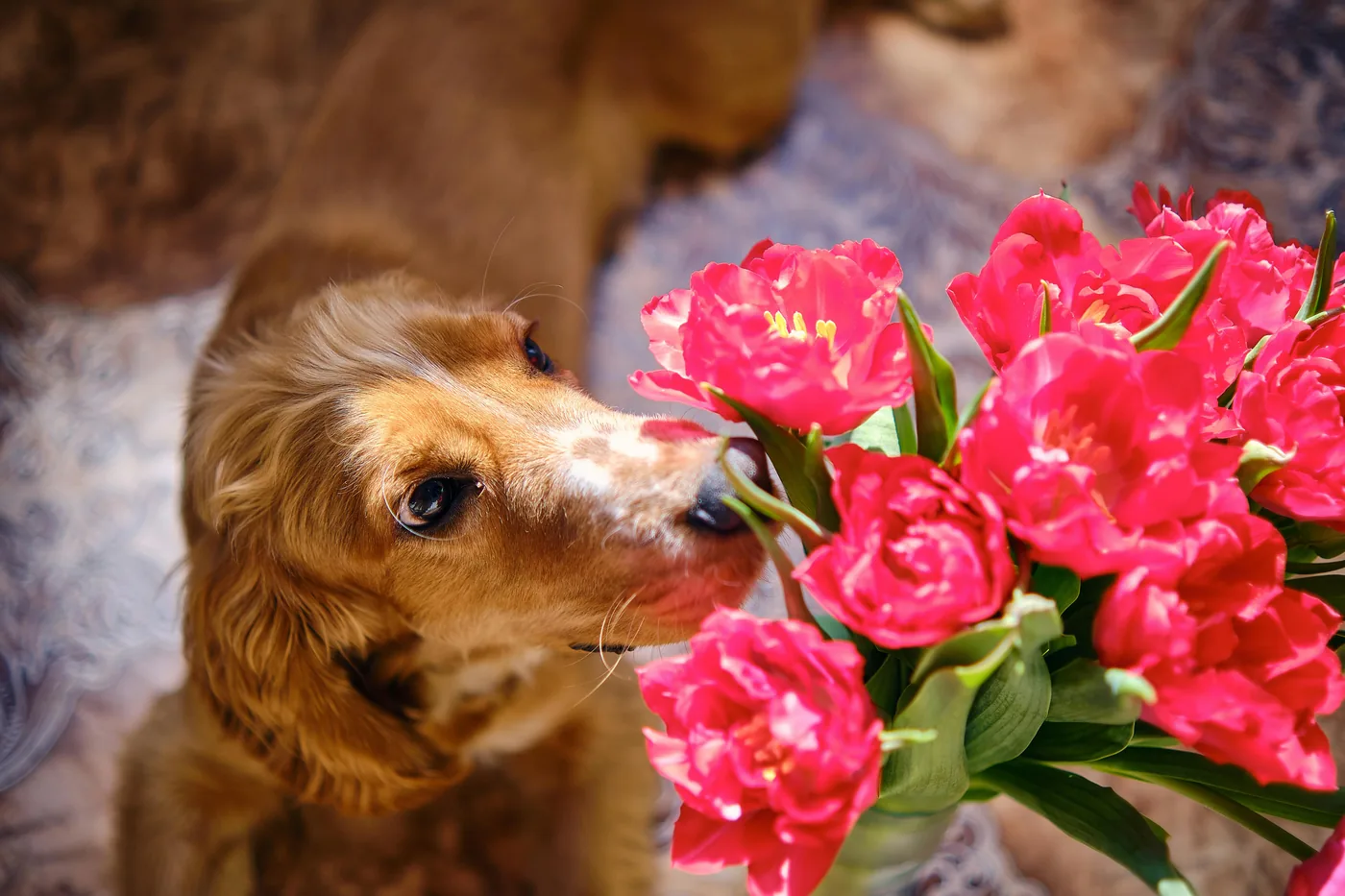
Kinder flowers for pet households
No plant is entirely risk-free, because a pet that eats a lot of anything may end up with an upset stomach. The flowers below are not linked with serious poisoning, which makes them sensible choices for homes with animals.
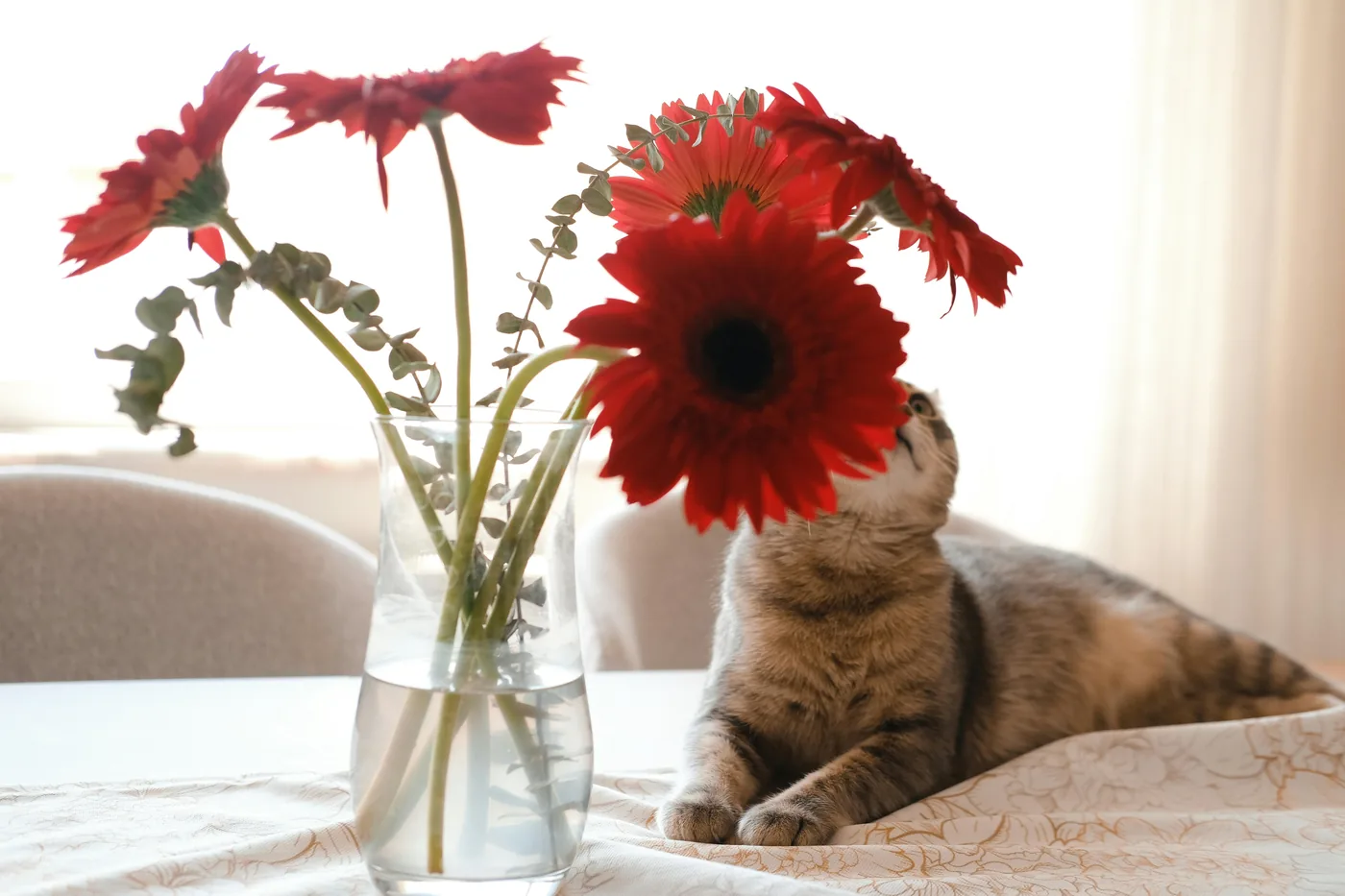
If your pet has chewed a flower
- Clear the mouth. Gently remove any plant pieces and rinse with lukewarm water if your pet stays calm. Collect leftovers from the floor.
- Work out what it was. Keep a piece or take a photo, and note how much and roughly when. A vet will want to know.
- Call for advice straight away. Ring your vet or the nearest 24-hour emergency clinic. The Animal Poisons Helpline (1300 869 738) can also advise.
- Do not make your pet vomit. It may do more harm. Wait for a vet’s instructions.
- Watch the animal carefully. Symptoms such as drooling, vomiting, lethargy, seizures or reduced urine output require an emergency vet visit, even if the animal seems lively at first.
How quickly can signs appear?
Timing varies with the plant, the amount and the animal. Never hold off calling until symptoms look obvious.
Questions people ask
Which bouquet flowers are most dangerous for cats?
True lilies (Lilium) and daylilies (Hemerocallis) top the list. A nibbled petal, a lick of pollen or a sip of vase water can be enough to cause kidney failure in a cat. Tulips, hyacinths and amaryllis are also risky, mainly through the bulb.
Can a cat get sick from drinking vase water?
Yes, if lilies have been standing in it. Pollen and sap dissolve in the water. Keep lilies out of any home with a cat, and if a cat has had contact with them, phone a vet straight away rather than waiting to see what happens.
My dog ate part of a tulip. Should I worry?
Tulips tend to cause drooling, vomiting and diarrhoea, with the bulb being the worst part. Take the plant away, offer a little water and ring your vet or the Animal Poisons Helpline for advice, especially if your dog has swallowed bulb material or keeps vomiting.
Which flowers are friendlier for homes with pets?
Roses, gerberas, sunflowers, snapdragons, freesias and most orchids are generally not linked with serious poisoning. Nothing is entirely risk-free, because any plant can upset a stomach if a pet eats a lot of it.
How quickly do signs show up?
It depends on the plant and the animal. Drooling and vomiting can start within hours, and kidney damage from lilies in cats may only become obvious a day or more later. Never wait for symptoms before calling for advice.
Who can I phone if my pet has eaten a flower?
Ring your vet or your nearest 24-hour emergency vet first. You can also call the Animal Poisons Helpline on 1300 869 738 for advice. If a person has swallowed part of a plant, call the Poisons Information Centre on 13 11 26.
Is lily pollen a problem even if the cat never ate the flower?
Yes. Pollen brushes onto fur and is swallowed during grooming. If you see orange dust on a cat, wipe it off with a damp cloth and ring a vet for advice.
Are amaryllis plants safe to have around?
Amaryllis is listed as toxic to dogs and cats, so keep it well out of reach or choose another flower. Bulbs and stems hold the most harmful compounds.
What should I do if I do not know which plant was eaten?
Keep a piece of the plant or snap a photo, note roughly how much and when, and ring a vet. Do not try to make your pet vomit unless a vet tells you to.
Are hydrangeas a danger to dogs and cats?
Hydrangea leaves and buds contain cyanogenic glycosides. A small chew usually means a mild stomach upset, but larger amounts can be more serious, so phone a vet if your pet has eaten a fair bit or seems unwell.
How can I keep my cat away from lilies?
The surest way is not to bring them inside at all. When you order, ask for a bunch without lilies or daylilies, and check mixed bouquets for lily-type blooms before they go on a table.
Are all flowers called lilies equally risky?
No, and the names are confusing. Peace lilies, calla lilies and lily of the valley are not true lilies, and each carries its own risks. When in doubt, treat anything called a lily as unsafe for pets until a vet says otherwise.
Related guides
Read more about the flowers mentioned here, or look at kinder alternatives.
Lilies and cats
Why Lilium and Hemerocallis are so risky, and what to do after contact.
Gentler flowers for pet owners
Roses and other gentler options, with colours, meanings and care.
Daffodils and dogs
Daffodils contain lycorine. See the signs to watch for and how to lower the risk.
Pet-friendly bunches
Flowers and bouquets built around roses, gerberas, sunflowers and other gentler blooms.
Pick flowers with your pets in mind
Browse bunches and cut flowers that generally sit better with a dog or cat at home.
See all bouquetsMore guides you might find useful
Disclaimer. This guide offers general information only and is no substitute for veterinary advice. If you suspect poisoning, contact a vet first.