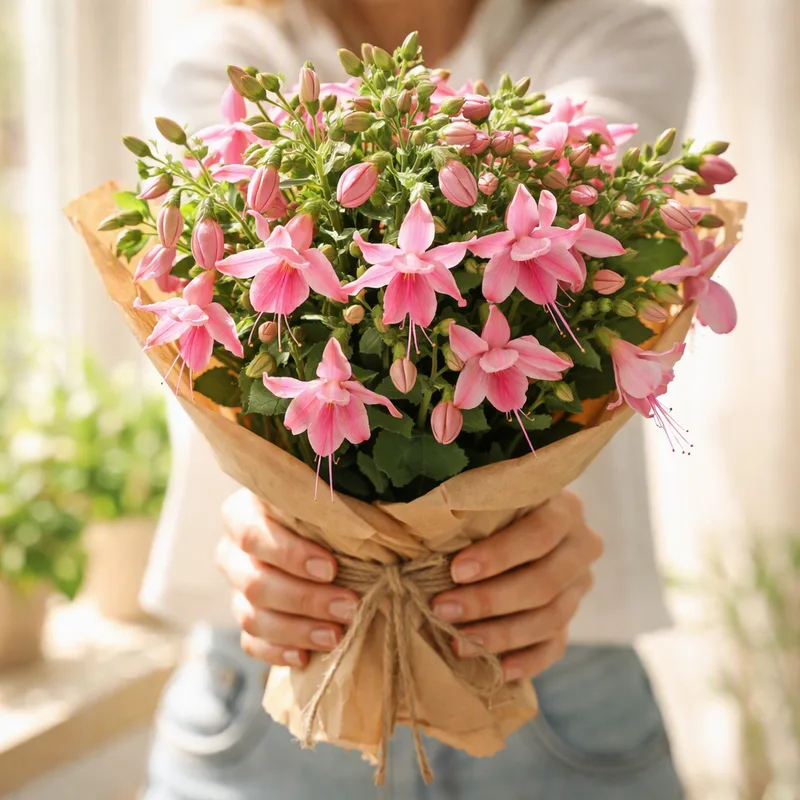
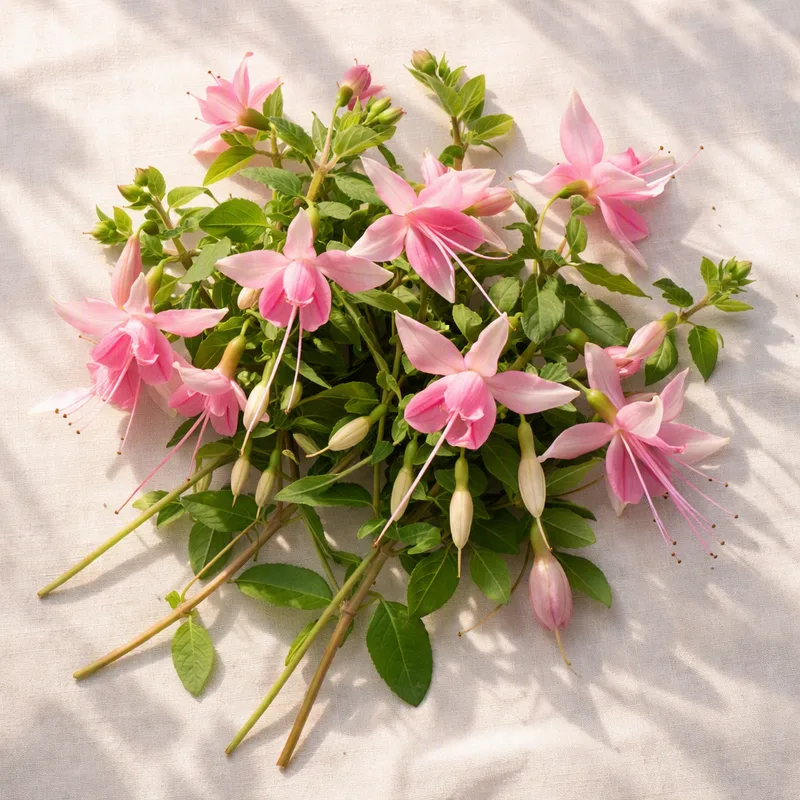
The plant and the shade
The genus Fuchsia was named after Leonhart Fuchs, a 16th-century German botanist. Most of its roughly 100 species grow wild in Central and South America, with a few in New Zealand and Tahiti. The colour name came from the flower, not the other way round. If you searched for "fuchsia colour", the answer is a vivid purplish pink; in web design the name fuchsia is simply another word for magenta.
Built like a lantern
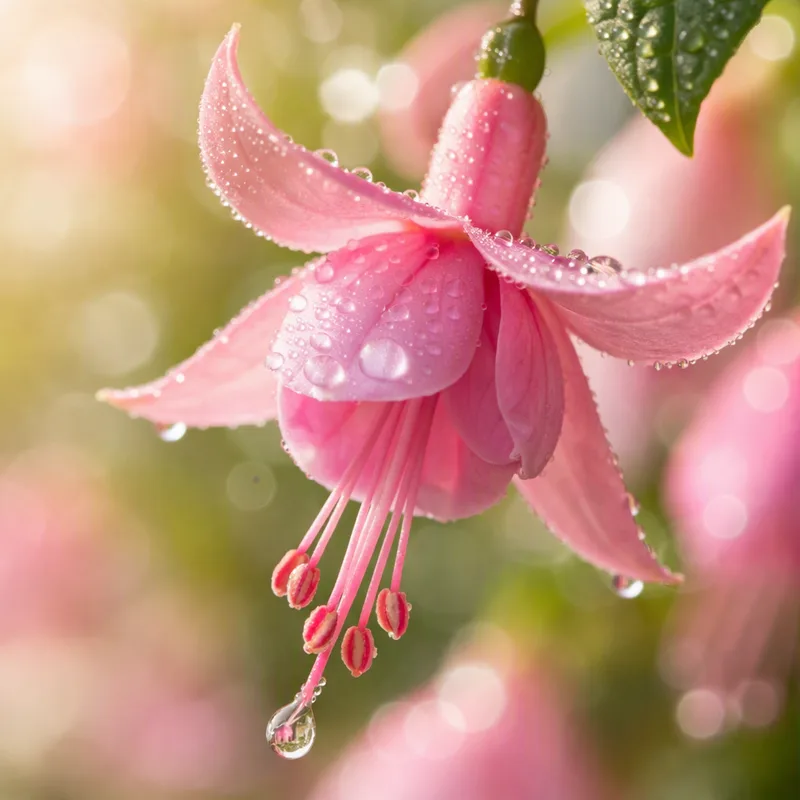
Each flower hangs from a thin stalk. A coloured tube opens into four pointed sepals, and inside them sits a skirt of petals that is often a different shade. Long stamens and a single style poke out below. In the Americas, many species are pollinated by hummingbirds, while New Zealand's tree fuchsia, kōtukutuku, is pollinated by birds and insects there.
Where it works in Australia
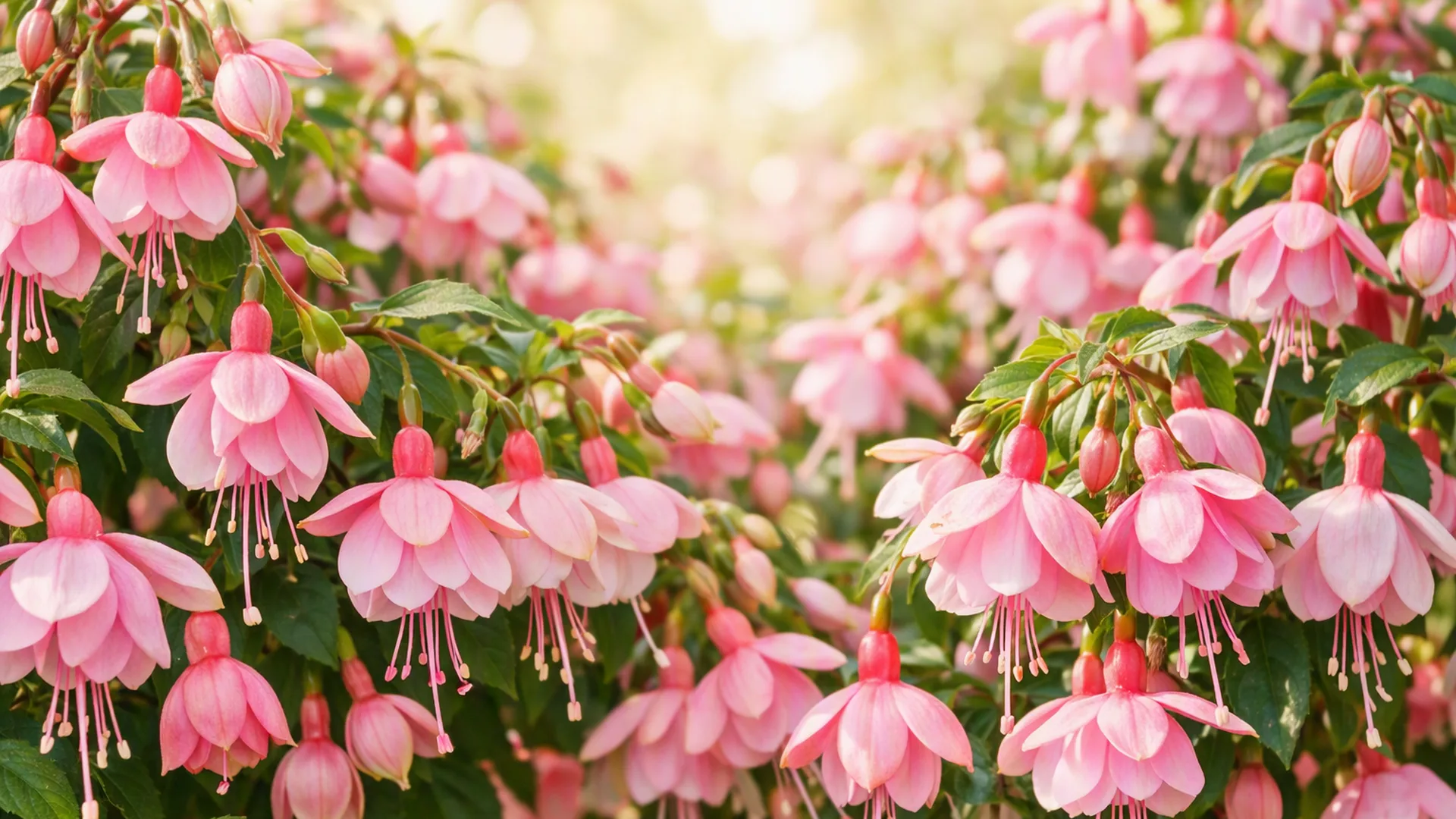
Fuchsias are not at all like sun-loving annuals. They love cool, humid, sheltered spots, which is why they do so well in the Dandenong Ranges, the Blue Mountains, Tasmania and the Adelaide Hills. They struggle in the hot, dry winds of an inland summer and in the tropical north.
- Pick a spot with sun early in the day and shade after lunch.
- Use a rich, moist, free-draining potting mix.
- Water often in hot weather; a basket can dry out in a day.
- Prune in late winter, just before new growth starts.
Berries and the household animals
The ASPCA does not class fuchsia as poisonous to dogs, cats and horses. The small berries that follow the flowers are edible in some species, but they vary a lot in taste, and are not worth encouraging a pet to eat.